
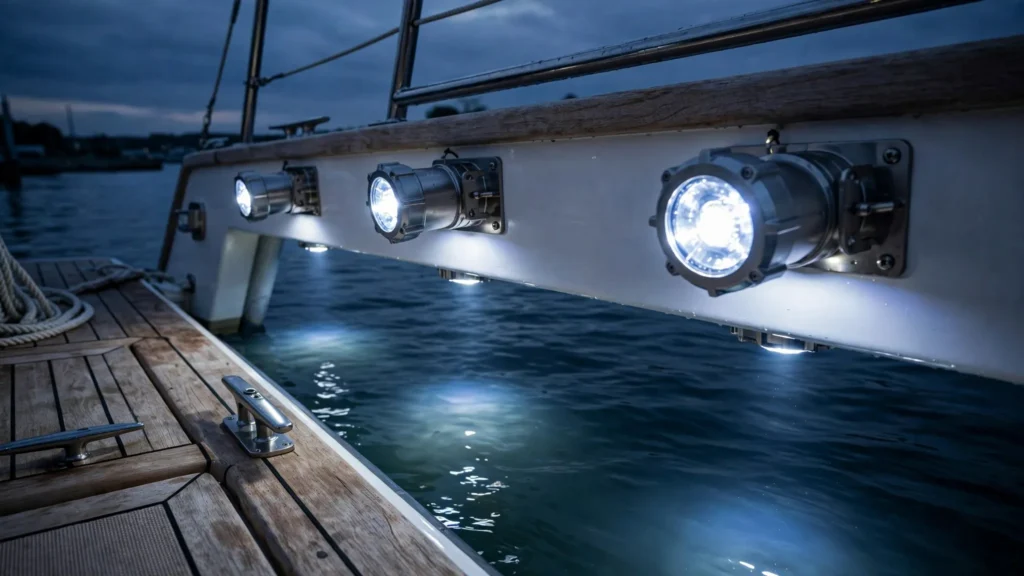
Waterproof marine LED lighting is one of the most important upgrades for any boat. It improves visibility, enhances safety, and withstands harsh marine conditions. Choosing the right system requires more than comparing brightness or price. Saltwater, vibration, moisture, and constant UV exposure demand lighting built for marine environments.
We should evaluate every lighting component before installation. High-quality waterproof marine LED lighting reduces maintenance, lowers energy use, and delivers reliable performance for years. Marine LEDs typically consume up to 80% less electricity than traditional halogen bulbs while lasting between 30,000 and 50,000 operating hours. These advantages make them a practical investment for recreational boats, fishing vessels, and commercial fleets.
This guide explains the most important features to consider before buying. We also cover waterproof ratings, materials, brightness, beam patterns, color temperature, certifications, and installation factors. Understanding these details helps us choose lighting that performs consistently in demanding marine conditions without frequent replacements.
| Feature | Recommended Specification | Why It Matters |
|---|---|---|
| Waterproof Rating | IP67 or IP68 | Protects against water and dust |
| Housing Material | Marine-grade aluminum or 316 stainless steel | Prevents corrosion |
| LED Lifespan | 30,000–50,000 hours | Reduces maintenance |
| Operating Voltage | 9V–32V DC | Supports different marine systems |
| Color Temperature | 5,000K–6,500K | Provides clear white illumination |
| Lens Material | UV-resistant polycarbonate | Resists cracking and yellowing |
Why Waterproof Ratings Matter
Choose the Right IP Rating
Waterproof marine LED lighting should always include an official Ingress Protection (IP) rating. This international standard measures resistance to dust and water. An IP67 light survives temporary immersion in water up to 1 meter for 30 minutes. IP68 products provide even greater water resistance under manufacturer-defined conditions.
Many low-cost lights advertise waterproof performance without certification. We recommend verifying the IP rating before purchasing. Certified products undergo standardized testing, giving boat owners greater confidence in long-term reliability.
Look for these minimum standards:
- IP67 for deck and cabin lighting.
- IP68 for underwater applications.
- Fully sealed wiring connections.
- Corrosion-resistant cable entry points.
Selecting certified waterproof marine LED lighting helps prevent electrical failures caused by moisture intrusion.
Build Quality and Marine Materials
Corrosion Resistance Determines Lifespan
Marine environments are extremely aggressive toward electrical equipment. Saltwater accelerates corrosion, while sunlight weakens plastic components over time. Premium waterproof marine LED lighting uses marine-grade aluminum, powder-coated finishes, or 316 stainless steel housings to resist these conditions.
The lens material is equally important. UV-stabilized polycarbonate withstands impact and sunlight far better than standard acrylic. Silicone or EPDM rubber seals maintain waterproof performance throughout years of temperature changes.
Quality construction provides several benefits:
- Longer service life.
- Better heat dissipation.
- Improved vibration resistance.
- Reduced maintenance costs.
- Consistent waterproof protection.
High-quality materials often cost more initially but have lower replacement expenses over the product’s lifetime.
Brightness, Beam Pattern, and Color Temperature
Match the Light to the Application
Brightness should match the intended marine task instead of choosing the highest lumen output available. Flood beams illuminate wide deck areas, while spot beams provide long-distance visibility during navigation. Combination beam patterns offer balanced performance for multiple applications.
Color temperature also affects visibility. White LEDs between 5,000K and 6,500K produce crisp illumination that improves object recognition at night. Warm white lighting around 3,000K creates comfortable cabin environments with reduced glare.
When evaluating waterproof marine LED lighting, consider these specifications:
- Lumens based on installation location.
- Flood, spot, or combination beam.
- Anti-glare optics.
- Uniform light distribution.
- Minimal power consumption.
Selecting the correct beam pattern improves safety while avoiding unnecessary energy use.
Certifications, Electrical Performance, and Installation
Buy Lighting Designed for Marine Use
Electrical compatibility is just as important as waterproof construction. Most marine LED lights operate between 9V and 32V DC, allowing installation on both 12V and 24V electrical systems. Voltage protection prevents damage during charging fluctuations.
Reputable manufacturers also test products for vibration, electromagnetic compatibility, and thermal performance. Certifications demonstrate that lighting meets recognized quality standards instead of relying on marketing claims.
Before buying, verify:
- Marine-specific certifications.
- Reverse polarity protection.
- Over-voltage protection.
- Efficient heat management.
- Manufacturer’s warranty of at least 3 to 5 years.
Professional installation further improves performance. Proper cable sealing, marine-grade connectors, and waterproof fuse protection help preserve system reliability for many years. Explore our latest insights in How to Choose Work Lights for Construction, Agriculture, and Heavy Equipment.
Conclusion
Choosing waterproof marine LED lighting requires careful attention to waterproof ratings, construction quality, brightness, electrical compatibility, and certified performance. These factors directly affect durability, visibility, and long-term operating costs. Marine environments quickly expose weaknesses in poorly designed products, making quality more important than initial price.
We recommend selecting certified lights with IP67 or IP68 protection, corrosion-resistant materials, and proven marine engineering. A well-designed lighting system delivers dependable performance, improves onboard safety, and reduces maintenance throughout thousands of hours on the water.