
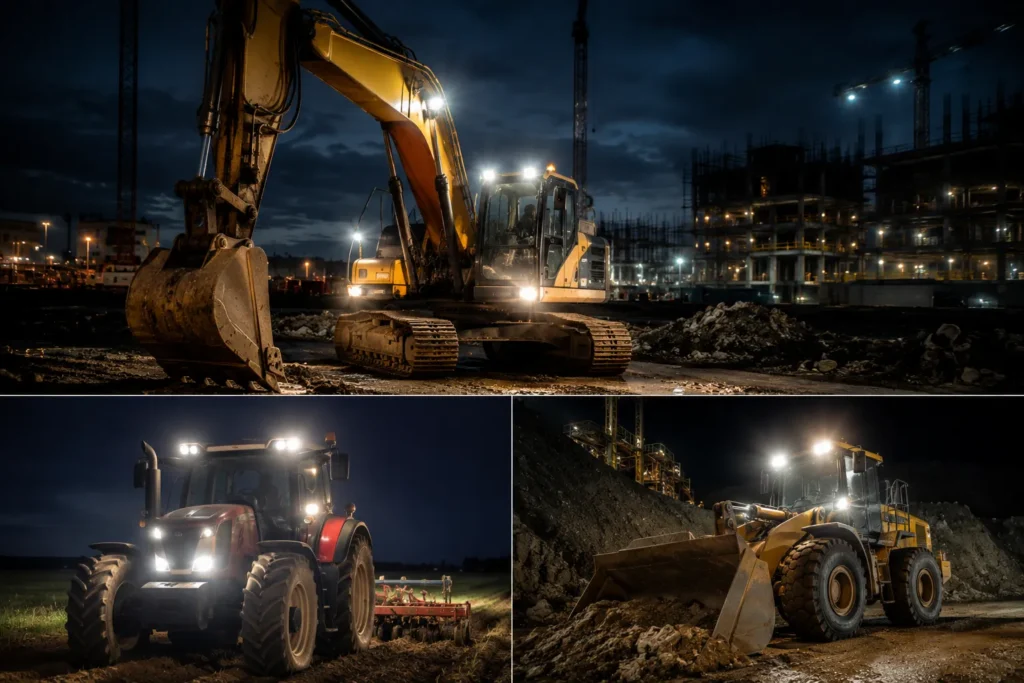
Work Lights play a critical role in construction, agriculture, and heavy equipment operations. According to the U.S. Bureau of Labor Statistics, nearly 55% of workplace incidents occur in low-light conditions or during night operations. Proper illumination improves visibility, reduces risks, and increases productivity across different environments.
Modern Work Lights use LED technology that delivers higher brightness with lower power consumption. Most heavy-duty LED units provide between 3,000 and 18,000 lumens while consuming only 30 to 180 watts. Their lifespan often reaches 50,000 hours, making them more economical than halogen alternatives.
We have seen operators in construction and farming benefit from upgraded lighting systems. Better visibility helps identify obstacles, improve precision, and reduce operator fatigue. Selecting the right Work Lights requires understanding beam patterns, durability, mounting options, and environmental conditions.
Different industries have unique requirements. Construction equipment faces dust and vibration. Agricultural machinery operates in moisture and mud. Heavy equipment often works around the clock in harsh environments. Choosing suitable Work Lights ensures reliable performance and improved safety.
Understanding Work Lights for Different Applications
Construction Lighting Requirements
Construction sites demand strong illumination because many projects continue after sunset. OSHA emphasizes adequate lighting to maintain worker safety and equipment visibility. Excavators, loaders, and cranes require powerful lights with wide beam coverage.
Most construction equipment benefits from LED Work Lights producing 4,800 to 9,600 lumens. Flood beam patterns help illuminate broad work areas. Spot beams improve long-distance visibility for operators handling large projects.
Dust resistance also matters. Equipment exposed to cement particles and debris should have an IP67 or IP68 rating. These ratings protect against water and dust intrusion. Aluminum housings and polycarbonate lenses improve durability under tough conditions.
Agricultural Equipment Lighting Needs
Agricultural operations often continue during harvest seasons. Farmers commonly work before sunrise and after sunset. Tractors, combines, and sprayers require dependable Work Lights to maintain efficiency.
Real-world experience shows that many farmers prefer 40-watt LED lights producing around 4,000 lumens. White light with a color temperature between 5,700K and 6,500K improves visibility while reducing eye strain.
Agricultural environments involve mud, rain, and vibration. Stainless steel brackets and waterproof housings help extend service life. Many premium LED lights withstand temperatures from -40°F to 140°F, ensuring year-round reliability.
Key Factors to Consider When Choosing Work Lights
Brightness and Beam Patterns
Brightness determines how effectively Work Lights illuminate a workspace. Lumens measure total light output. Higher lumens provide stronger illumination, but excessive brightness can create glare.
Common beam patterns include:
- Spot beam for long-distance visibility.
- Flood beam for wide-area coverage.
- Combination beam for balanced performance.
- Diffused beam for close-range tasks.
Industry experts recommend combination beams for heavy equipment because they provide both distance and peripheral lighting. Operators can identify obstacles earlier and improve overall safety. Start your journey with our guide to Why Proper Headlight Maintenance is Essential for Road Safety
Durability and Power Consumption
Durability affects long-term operating costs. Heavy-duty LED Work Lights typically have vibration resistance ratings exceeding 15G. Premium units also feature die-cast aluminum housings and impact-resistant lenses.
LED technology offers excellent energy efficiency. A 60-watt LED light can replace a 150-watt halogen unit while consuming 60% less power. Lower power consumption reduces strain on equipment electrical systems.
Manufacturers such as Grote Industries and HELLA report LED lifespans exceeding 50,000 hours. This translates into years of operation before replacement becomes necessary.
Comparing Common Work Light Specifications
| Feature | Entry-Level LED | Mid-Range LED | Heavy-Duty LED |
|---|---|---|---|
| Brightness | 2,500 lumens | 6,000 lumens | 12,000 lumens |
| Power Consumption | 25 watts | 60 watts | 120 watts |
| Lifespan | 30,000 hours | 50,000 hours | 50,000 hours |
| Waterproof Rating | IP65 | IP67 | IP68 |
| Operating Temperature | -20°F to 120°F | -40°F to 140°F | -40°F to 140°F |
| Typical Price | $25-$45 | $60-$130 | $150-$320 |
Installation and Maintenance Considerations
Proper Mounting Locations
Correct placement improves Work Lights performance. Front-mounted lights enhance forward visibility. Rear-mounted lights assist with reversing and trailer operations. Side-mounted lights increase peripheral awareness.
Equipment manufacturers often recommend positioning lights above eye level to minimize glare. Adjustable brackets allow operators to direct beams precisely where needed.
Experienced operators frequently use multiple beam patterns together. Flood lights illuminate nearby areas, while spot beams extend visibility further ahead.
Routine Maintenance Practices
Regular inspections help maintain lighting performance. Dirt accumulation can reduce brightness by 30%. Cleaning lenses monthly improves light output and visibility.
Important maintenance practices include:
- Inspect wiring connections every three months.
- Remove mud and debris from lenses.
- Replace damaged brackets immediately.
- Check seals for moisture intrusion.
- Tighten mounting hardware regularly.
These practices extend equipment life and improve operational safety.
Conclusion
Choosing Work Lights involves more than selecting the brightest option. Construction, agriculture, and heavy equipment operations require lighting systems designed for specific environments. Brightness, beam pattern, durability, and waterproof ratings all influence performance.
Our experience shows that LED technology provides the best balance between efficiency and longevity. High-quality Work Lights reduce downtime, improve safety, and increase productivity. Equipment operators who invest in durable lighting solutions benefit from better visibility and lower maintenance costs. Selecting the right lighting system ensures dependable operation throughout demanding work conditions and challenging weather environments.